
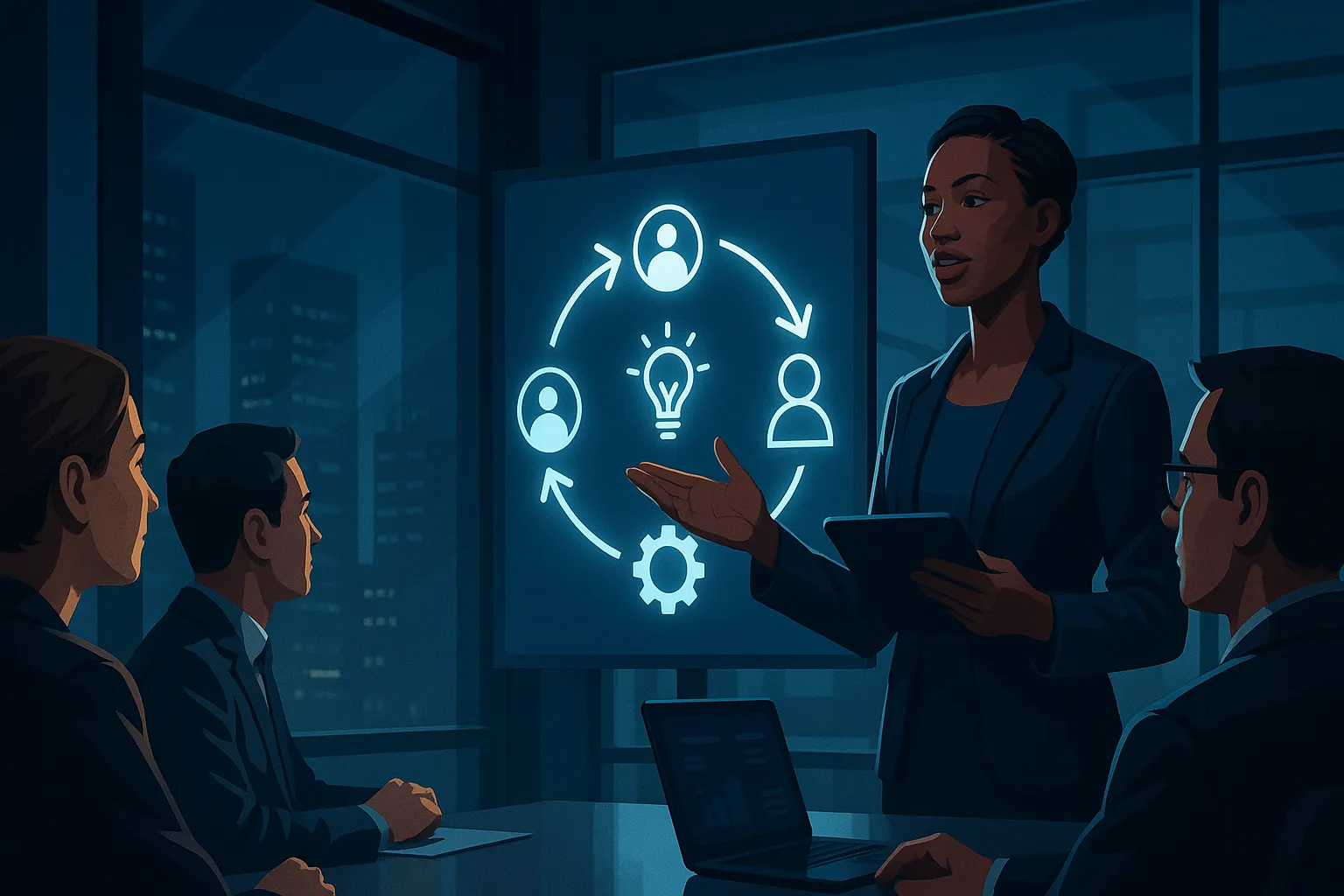
Change Fatigue Is Real: Leading Transformation People Can Sustain
Every transformation business case assumes an organisation ready to change. Almost none audits what the organisation has already been asked to absorb. The average enterprise employee has lived through a major system replacement, at least one restructure, a pandemic-era workplace upheaval, and a continuous stream of new tools and processes — most of them landing as announcements rather than choices.
The result is a measurable phenomenon: change fatigue. It does not look like resistance. It looks like compliance without commitment — people attending the training, nodding in the town hall, and quietly continuing to work the old way wherever they can.
Why standard change management makes it worse
The classic playbook — communications cascade, training plan, champions network — was designed for one change at a time. Applied to the fifth concurrent initiative, it becomes noise. More communication is not the answer when communication volume is the problem.
What sustainable change leadership looks like
- **A visible change portfolio.** Leadership sees everything hitting each population, sequenced deliberately — the people version of portfolio management that finance already applies to money.
- **Subtraction before addition.** Every new way of working explicitly retires an old one. Teams can name what they have stopped doing.
- **Capacity honestly priced.** Frontline managers get real allocation for absorbing change, not change added to full-time operational loads.
- **Participation over announcement.** The people who operate a process co-design its future — slower at the start, dramatically faster at adoption.
- **Stability zones.** Deliberate periods where nothing new lands for a team, treated as seriously as delivery milestones.
People don't resist change. They resist being changed — and they cannot sustain being changed continuously.
Where Ganexa can help
Ganexa's Change Management and Enterprise Change Management practices treat adoption as the product, not the afterthought — change-load assessment, sequencing, manager enablement, and the participation structures that turn compliance into commitment. It is the People half of our People-to-AI philosophy, applied where transformations are actually won.