Industrial AI on the Factory Floor: Vision, Maintenance and People
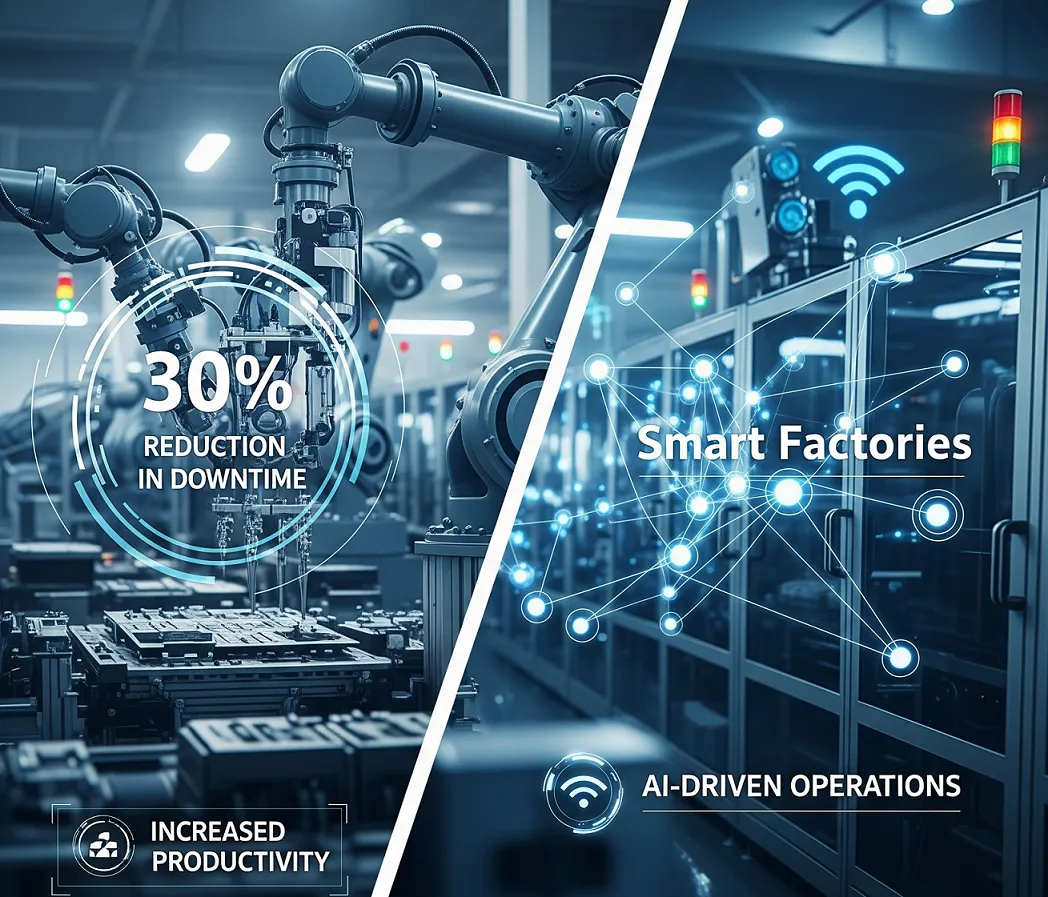
While boardrooms debate generative AI, some of the most dependable returns from industrial AI are being booked on the factory floor, quietly and without much ceremony. Two use cases stand out: computer vision for quality inspection and predictive maintenance for critical equipment. Both are narrow, both are measurable, and both often run on data the plant already collects.
They are also where many manufacturers stall. The model works in the pilot, then sits unused because operators were never consulted, the maintenance planners do not trust it, and nobody decided what happens when it is wrong. Our stance is simple: the technology is the easier half. The plants that get lasting value design the work, the roles and the fallback procedures around the people on the line, then add the model.
Computer vision for quality inspection
Manual visual inspection is inconsistent, does not scale and misses defects when attention flags. Every escaped defect risks scrap, rework, a customer complaint or a recall. Computer vision inspects every part at the speed of production, with the same standard at the end of a night shift as at the start of a day shift.
The detection is only part of the value. Tuned to your specific parts and defect types, a vision system turns subjective spot checks into consistent, traceable quality data. That record matters for audits and for root-cause analysis, because defect patterns can be tied back to a machine, a tool, a material batch or a shift.
Three practical points decide whether it works:
- Lighting and fixturing come first. Most failed vision projects are optical problems, not AI problems.
- Defect libraries need owners. Someone in quality must own the labelled examples, agree what counts as a defect, and approve changes.
- Borderline calls go to a person. Route uncertain images to an inspector, and feed their decisions back as training data.
Predictive maintenance on data you already collect
Unplanned downtime usually costs far more than the maintenance that would have prevented it. Yet calendar-based servicing either over-maintains healthy equipment or misses failures that develop between intervals. Predictive maintenance reads the signals equipment already emits, such as vibration, temperature, current draw, pressure and cycle times, and flags developing faults early enough to plan the repair.
Most plants collect much of this data and never use it. It sits in historians, PLCs and machine controllers, disconnected from the maintenance system that would act on it. That is why connectivity comes before intelligence: no model can watch an asset it cannot see. Unifying operational technology data with IT systems, securely, is usually the real first project, and it is a data strategy question as much as an engineering one.
Be selective. Rank assets by criticality and cost of failure, and start with the handful where a stoppage halts the line. A prediction is only useful if it changes a decision, so connect alerts to work orders, spares planning and production scheduling. An alert that arrives in an inbox nobody reads is not predictive maintenance. It is a dashboard.
Both use cases share a useful property: they can be validated against your own history before anyone relies on them. Success shows up in measures the plant already tracks, such as scrap, rework, downtime hours and maintenance cost. That makes the AI business case far easier to defend than most.
Human-centric by design: what Industry 5.0 gets right
The earlier vision of the smart factory was lights-out production. What most manufacturers got was a collection of disconnected pilots. Industry 5.0 reframes the goal as resilient, sustainable, human-centric production, where technology amplifies skilled operators instead of aspiring to remove them.
The smart factory is not the one with the most robots. It is the one where data, machines and experienced people make each other better, shift after shift.
Treat operators and technicians as users, not obstacles. Design the interface with the people on the line, and surface the next best action, not another dashboard nobody asked for. Adoption follows usefulness.
There is also a knowledge problem that AI can help with. Many plants are losing experienced operators and technicians faster than they can replace them, and much of what those people know has never been written down. Every time an expert confirms or corrects a vision call, or records what they found when they opened a gearbox the model flagged, their judgement is captured in a system instead of leaving with them. That only happens if the experts take part willingly. Plan the change and adoption work alongside the technical work, not after it.
Resilient operations when the model is wrong or offline
Models drift. A new material supplier, a tooling change or a product variant can quietly degrade a vision system. Resilient operations assume this will happen and plan for it.
- Define the fallback. If the vision station fails, what is the manual inspection procedure, and are people still trained to carry it out?
- Monitor the model like an asset. Track false rejects, escaped defects and missed failures, and review them on a schedule with quality and maintenance leads.
- Keep a person accountable. Each model needs a named owner on the operations side, with authority to pause it.
- Secure the connection. Linking the shop floor to analytics platforms widens the attack surface, so segment networks and control access from the first day.
The same visibility serves other pressures. Energy costs and sustainability reporting reward plants that can see where energy and material are wasted, and supply volatility rewards plants that can reconfigure quickly.
Where to start: one line, end to end
Ten pilots across ten plants produce ten slide decks. One production line digitised completely produces a reference that others can visit, question and copy.
- Pick one line and one problem. Choose the line where downtime or defects hurt most and where the plant manager wants the help.
- Baseline before you build. Record current scrap, rework, downtime and maintenance cost, so the result can be judged honestly.
- Validate on history. Test against past failures and known defects, and share the results openly with operators and planners.
- Design the workflow with users. Agree who sees an alert, what they do with it, and how they record the outcome.
- Decide the scaling rule in advance. State what evidence would justify rolling out to the next line.
Common questions
How quickly does predictive maintenance pay back?
It depends on asset criticality, how often failures occur and whether the data is already accessible. Validate the model against your own failure history first, which gives an evidence-based estimate before significant spend.
Do we need new sensors to start with industrial AI?
Often not. Many machines already produce signals through their controllers and drives that are never analysed. Start with what exists, find the gaps on your most critical assets, and add sensors only where they would change a decision.
Will computer vision replace our quality inspectors?
In most plants it changes the role more than it removes it. The system handles repetitive, high-volume checks, while inspectors handle borderline cases, maintain the defect library and investigate causes. Their judgement is what keeps the system accurate over time.
Where Ganexa can help
Ganexa works with manufacturers on the sequence that makes industrial AI stick: people and operating model first, then data, then models. Our manufacturing and industrial engineering team can help you choose the first line, and an AI readiness assessment will show what your data and organisation can support today. If you would like to talk it through, book a free consultation.